
Iconography in the Orthodox Tradition
By Eleny Berehanu
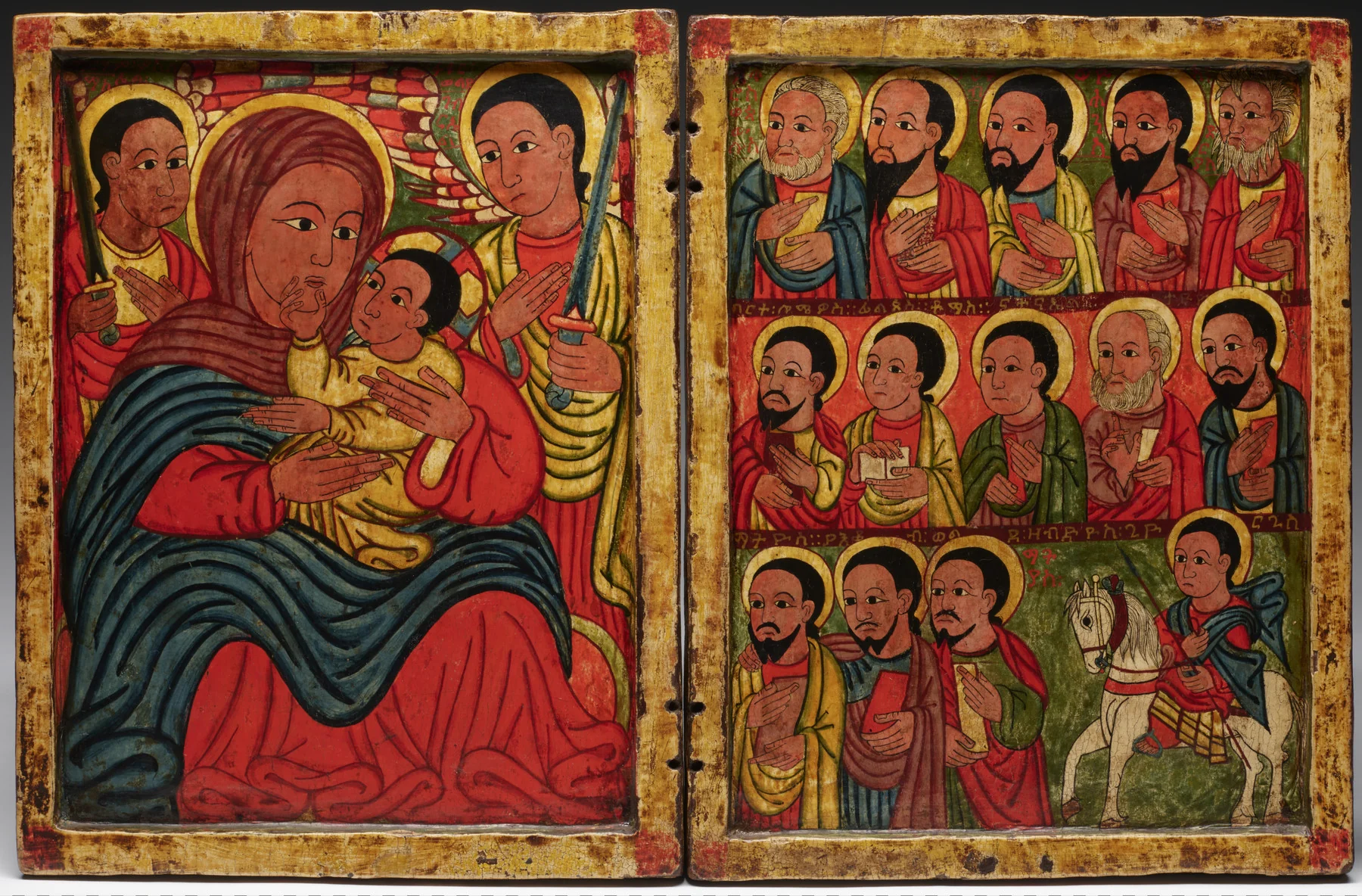
Sunday, 6 a.m., I walk into church with my mom and find a spot to stand. I look around at the space with multiple eyes staring back at me. I stare back in confusion and a little unease. It wasn't any of the people there, but rather the saints, angels, and even Jesus peering back at me.
Back in middle school, as someone who had a love for art and drawing, I found myself staring at these images and wondering why each felt so alive. What kind of art style was this, with their eyes so large and intense?
These questions filled my head every liturgy, but it would take years before I understood their meaning.
What is Iconography?
In essence, icons are used to assist in worship. They are the paintings and depictions of saints, angels, the Virgin Mary, and Jesus that fill Eastern and Oriental Orthodox churches, guiding the body in prayer. A common misconception held by some atheists and other Christian denominations is that by showing adoration to icons, Orthodox Christians in turn commit idolatry. However, this couldn't be farther from the truth. What is being shown is veneration, a deep respect and honor directed towards the figure represented in the icon, not the material or painting itself.
Icons aren't mere decorations. They are often described as "written" rather than painted because of the dense symbolism and stories they hold. They testify to the mystery of God's incarnation, our unseen and bodiless God taking on human form, uniting his divine nature with human nature. Thus, when we venerate an Icon, the honor and praise are offered to God through the icon.
Symbolism and Meaning
Symbolism in iconography runs as deep as the choice of colors. A blue garment represents humanity, while a red garment represents divinity. In Icons of the Virgin Mary and Baby Jesus, Mary is depicted with a blue undergarment and red outer garment to symbolize that she was human but became divine through Christ. Jesus, on the other hand, is depicted with a red undergarment and blue outer garment to symbolize that he is divine and took on humanity. These color meanings are often reversed depending on the artistic tradition, like Ethiopian Iconography, where Mary may be depicted with a blue outer garment and a red undergarment. Purity and eternal life are represented through white, while the void of life is often represented through black.
Eyes in iconography deliberately look back in a symbolic sense. They are meant to invite the worshipper into prayer and to focus devotion towards Christ. The eyes connect the visible icons with the invisible divine presence.
Halos are another prevalent theme in icons. They are symbolic markers of divine grace and holiness. This is why they appear on saints who reflect the grace of Christ. Christ's halo often contains a cross, referring to his sacrifice for humanity and his unique divinity. Halos are meant to remind the viewer of the spiritual reality behind the image.
Why Does Iconography Matter Today?
Iconography remains deeply significant today because it connects us to the traditions of the early church. Icons help make faith visible and tangible, and through the depictions of Christ, his Mother, the saints, and more, believers have a constant reminder of sacred truths and events that otherwise may not have been readily known. They serve as tools for understanding and visualizing the spiritual teachings of the Bible.
They also emphasize the reality of the incarnation, proclaiming that God became truly present in the world. Icons reflect the idea that faith is something to be felt and experienced, not merely believed conceptually.
The Holy Spirit dwells within icons, making them a vessel for prayer and connection. They guide the mind and heart during worship, ultimately deepening believers' relationship with God.
Beyond the Image
And so the eyes I once hesitated to meet were always meant to meet mine. To invite me to prayer and connect my presence with that of the divine presence. Over time, I came to understand that these depictions aren't just there for decoration but rather exist to reveal and convey the stories and truths I hadn't fully known.
Glory be to God forever and ever, Amen.
References
- Fr. Geoff Harvey, An Introduction to Iconography. (2024). Thegoodshepherd.org.au.
- Harmony. (2024, December 4). Hidden History of Early Christian Art. YouTube.
- Jeremiah, D. (2018, October 22). Why do the Orthodox have Icons? Orthodox Road.
- Vladimir Rodzianko. (2023, October 29). Exploring the Sacred World of Orthodox Icon. Orthodoxdepot.com; Orthodox Depot.